Discover Lithuania
Contact information
In case if you would you have any questions or you would like to consider Lithuania as you next vocations destination, please fill free to contact Jevgenij on culture-diversity@ape-eelm.eu.
Location
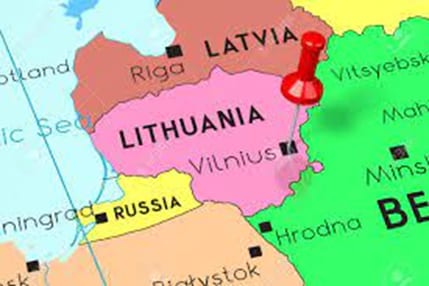
Lithuania located in the North part of Europe, near the Baltic sea.
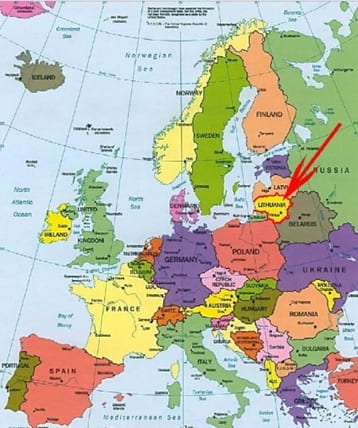
Some researches claiming, that Lithuania is located in the geographical center of Europe, however depending on the method used for identification of geographical center few potential centers identified [1]:
- Croatia, near village of Krahule
- Ukraine, near village of Dilove
- Lithuania, near village of Girija
- Estonia, near island of Saaremma
- Belarus, near Polotsk
- Hungary, near the town of Tallya
Capital city
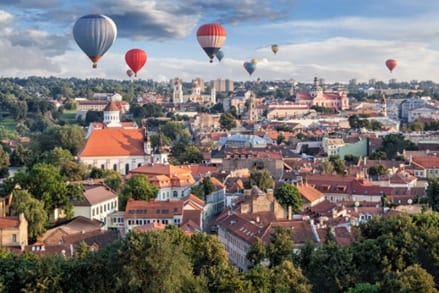
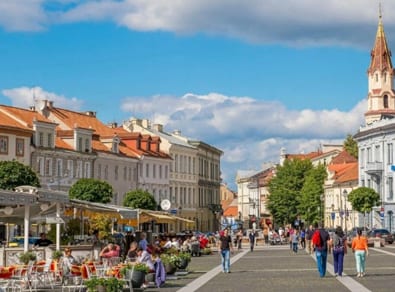
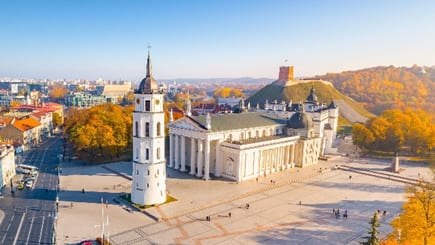
There is a dreamy quality to Vilnius (vil-nyus), especially in the golden glow of a midsummer evening. Lithuania's capital has an Old Town of rare authenticity: marvellously intact, its pebbly streets are lined with weather-worn period buildings that hide cafes, boutiques and dainty guesthouses.
Though a capital city, Vilnius feels much like an overgrown village. It's carpeted with green spaces, which cover around 40% of its area and studded with venerable Catholic and Orthodox church spires. But this is no Eastern European antique: artists, punks and a self-declared micro-nation keep Vilnius cutting-edge[2].
Flag
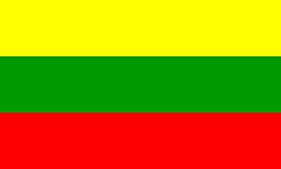
The flag of Lithuania (Lithuanian: Lietuvos vėliava) consists of a horizontal tricolor of yellow, green and red. It was adopted on 25 April 1918 during Lithuania's first period of independence (in the 20th century) from 1918 to 1940, which ceased with the occupation first by Soviet Russia and Lithuania's annexation into the Soviet Union and then by Germany (1941 - 1944). During the post-World War II Soviet occupation, from 1945 until 1989, the Soviet Lithuanian flag consisted first of a generic red Soviet flag with the name of the republic, then changed to the red flag with white and green bands at the bottom.
The flag was then re-adopted on 20 March 1989, almost a year before the re-establishment of Lithuania's independence and almost three years before the collapse of the Soviet Union. The last alteration to the current flag occurred in 2004, when the aspect ratio changed from 1:2 to 3:5 [3]
Territory
Area of Lithuania is about 65.000 km2 .Just for comparison, total population of Lille metropole is accounting for about 6.000 km2 , which means that Lithuania is just about 11 time bigger then Lille metropole [4].
Population
In 2021, there was about 2.6 Mln leaving in Lithuania and about 0.5 Mln of Lithuanians living abroad. Just for comparison, total population of Lille metropole is accounting for about 1.2 Mln, which means entire Lithuania as country is a bit more than twice bigger comparing to Lille in terms of population [4].
Climate
Lithuania has mild semi continental climate with mild summers and temperature below freezing point in winter.
If you don’t like cold weather and best to visit Lithuania in mid-summer, when temperatures are usually about 15-20oC and it goes few degrees lower in the evenings, but it still quite pleasant and warm.
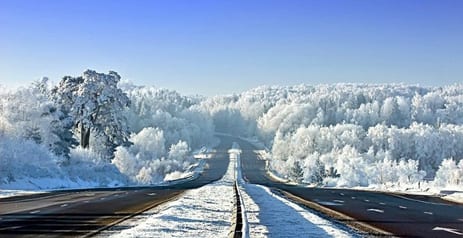
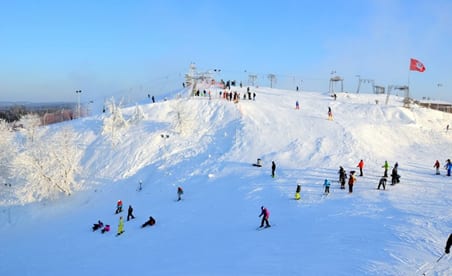
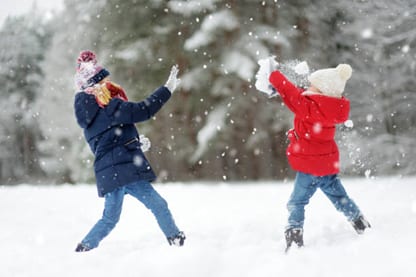
Winters are below freezing point sometimes with quite a lot of snow, temperatures could go down below -10oC, but there are still few interesting things you could do- downhill or land skying and kids could have fun with the snow. If weather is sunny, towns and villages, parks and forests have their own charm at this period.
Language
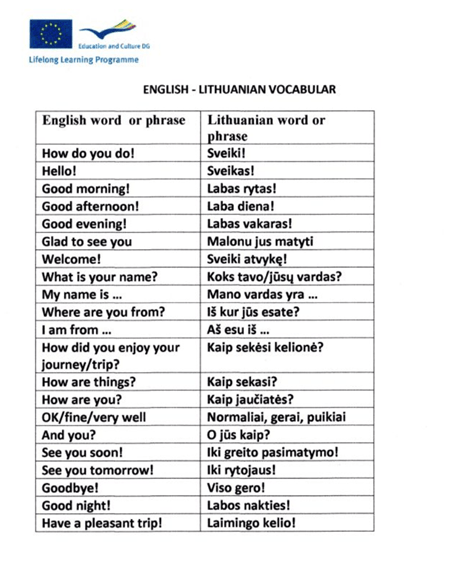
Lithuaniana Baltic language belonging to the Balto-Slavic branch of the Indo-European language family. It is the official language of Lithuania and one of the official languages of the European Union. There are about 2.8 million native Lithuanian speakers in Lithuania and about 200,000 speakers elsewhere.
Basic vocabulary of Lithuanian
Famous people
Alvydas Sabonis- sport, basketball.
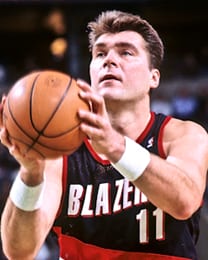
((Lithuanian pronunciation: [ˈaːrviːdaːs ˈsaːboːnʲɪs]; born December 19, 1964) is a retired Lithuanian professional basketball player and businessman. Recognized as one of the best European players of all time, he won the Euroscar six times and the Mr. Europa Award twice. He played in a variety of leagues including the Spanish ACB League and spent seven seasons in the National Basketball Association (NBA), in the United States. Playing the center position, Sabonis won a gold medal at the 1988 Summer Olympics, in South Korea, for the Soviet Union and later earned bronze medals at the 1992 Olympic Games and 1996 Olympic Games, while representing Lithuania [5].
Zydrunas Savickas- strongman sport.
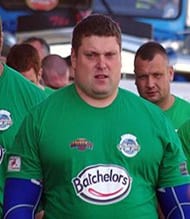
Zydrūnas Savickas first became interested in strength sports after watching a Lithuanian strongman contest on TV in 1989. Three years later, he took part in that same strongman contest and defeated a number of older and more experienced competitors. At age 17, Savickas began to train in powerlifting. In his second powerlifting contest, he broke all the Lithuanian records.
In 1998, Žydrūnas Savickas won his first Lithuania's Strongest Man contest. He would later go on to win this contest a total of 16 times. Savickas then competed in the 1998 and 2000 World's Strongest Man contests, but failed to qualify for the finals both times.
2003-2008, 2010, 2012, 2014 - Winner of the Arnold Strongman Classic 2005, 2006, 2008 - Winner of the IFSA World Strongman Championship 2009, 2010, 2012, 2014 - Winner of the World's Strongest Man 2012 - Winner of the Arnold Strongman Classic -Europe 2014 - Winner of the Arnold Strongman-Brazil tournament [7].
Virgilijus Alekna- disk thrower, sport.
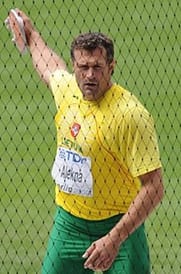
Alekna is disk thrower and he has won two gold medals in the Summer Olympics in the discus throw, the first was in 2000 and the second in 2004. He also won the bronze medal at the 2008 Beijing Summer Olympics. In 2007, he was appointed as UNESCO Champion for Sport. His personal record is 73.88 meters (242 ft 4½ in), surpassed only by the world record (74.08) [6].
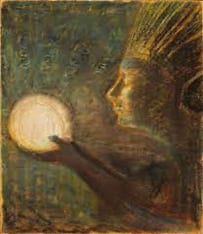
Mikalojus Konstantinas Ciurlionis- art.
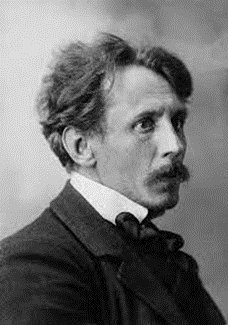
(Polish: Mikołaj Konstanty Czurlanis; 22 September [O.S. 10 September] 1875 - 10 April [O.S. 28 March] 1911) was a Lithuanian painter, composer and writer.
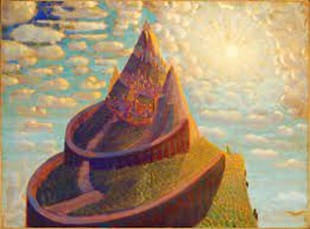
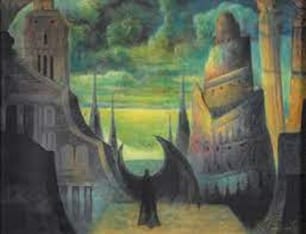
Čiurlionis contributed to symbolism and art nouveau and was representative of the fin de siècle epoch. He has been considered one of the pioneers of abstract art in Europe. During his short life, he composed about 400 pieces of music and created about 300 paintings, as well as many literary works and poems. The majority of his paintings are housed in the M. K. Čiurlionis National Art Museum in Kaunas, Lithuania. His works have had a profound influence on modern Lithuanian culture [8].
Some of his paintings:
Interesting facts
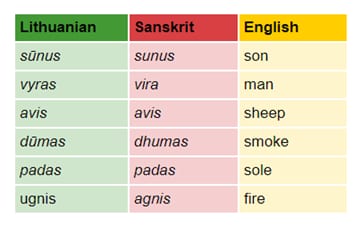
- Lithuanian is one of the oldest language still alive today. Lithuanian is a very old language. Linguists are particularly interested in Lithuanian because it is considered to be the oldest surviving Indo-European language. It retains many archaic features, which are believed to have been present in the early stages of the Proto-Indo-European language. What does that mean? Well, it means that Lithuanian is as archaic in many of its forms as Sanskrit, a classical Indian language, which also evolved from the Proto Indo-Eurpean language. Just compare several words from Sanskrit to Lithuanian [9].
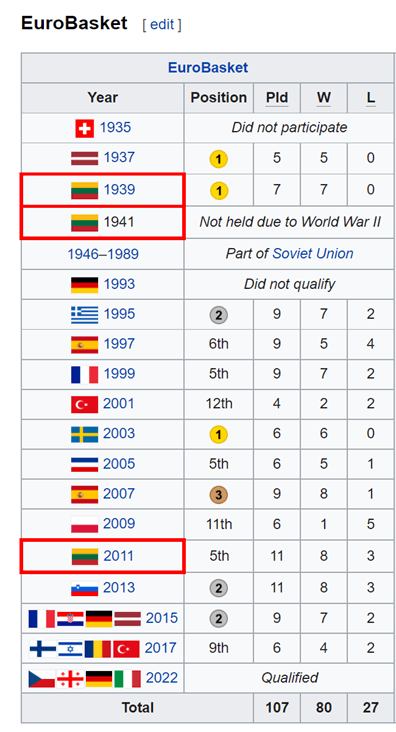
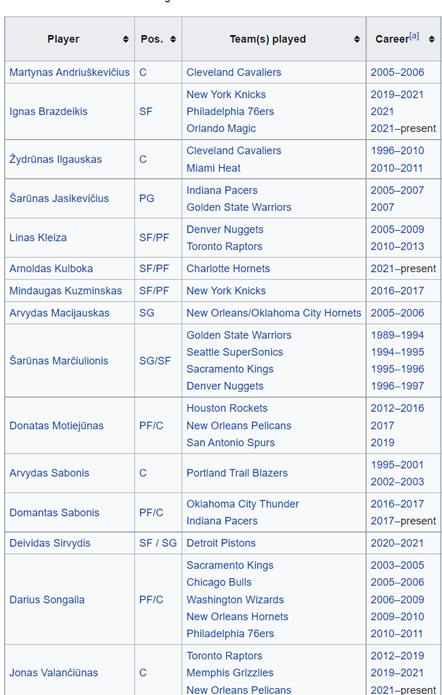
- National sport- basketball. Lithuanian are saying that basketball in Lithuania is not a sport, we are calling it “second religion”. Despite being small country national team was able to win quite few European titles in Eurobasket. As well as quite few player made it to NBA. Tiltes one by National basketball team [10]:
Lithuanian players in NBA:
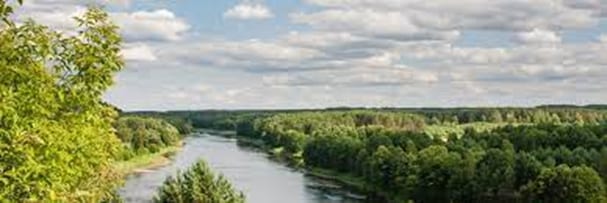
Nature in Lithuania is one of the greatest treasures. There are many places to visit- lakes, forests, natural parks, rivers and sea cost. To explore this, you could try tours with kayaks as well as rent the fully equipped house in the middle of “nowhere” with lake nearby.
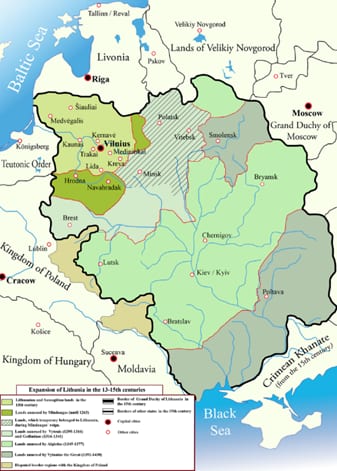
Once it was the largest country in Europe. It’s true, by the end of the 14th century, Lithuania was the largest country in all of Europe and one of the continents most powerful empires. This was because present-day Belarus and Ukraine, in addition to large swathes of Russia and Poland, were part of the Grand Duchy of Lithuania. In 1569 Lithuania and Poland formally united under one dual state called the Polish-Lithuanian Commonwealth [11].
Interesting places to visit in Lithuania
Vilnius- the capital
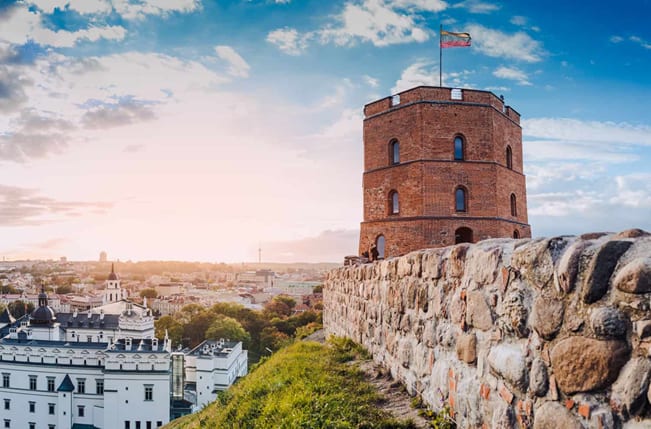
Well, it is a very diverse city. Most of the travellers and tourists visiting Vilnius are fascinated by Vilnius Old Town which is one of the largest in the region. It is also included into UNESCO World Heritage List. Some people do not even step out of Vilnius Old Town during their visit. And you cannot blame them. The narrow winding streets, magnificent churches on every corner (visit the church of St. Peter and St. Paul, which is famous for its interior!), hidden courtyards can take quite some time to explore and take in. So many places to take excellent pictures! However, if seeing is not enough for you, you can dive deep in the history of Vilnius and Lithuania by reading some guidebooks.
Druskininkai
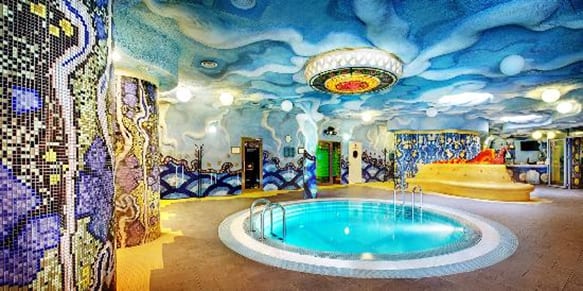
Druskininkai is a Lithuanian resort that popular all year around. This town offers various forms of the both active rest and peaceful relaxation. There are few main reasons to visit it:
- It is known as the SPA and resort capital in Lithuania for over 225 years, therefore there are many hotels which are offering SPA services, as well as there are many sanatoriums providing different treatments.
- There is very clean air in the area, as there is no industrial centers are located nearby and there is a big areas of pine forests nearby
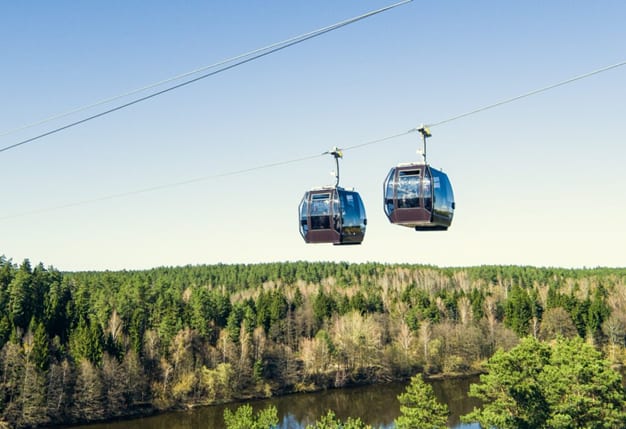
- Birds eye view- this is the only cable way in Lithuania over the river and forests, which connects different parts of Druskinkai
- Lots of culinary attractions- there is wide choice of traditional Lithuanian dishes as well as dishes from European countries.
Oldest tree in Europe
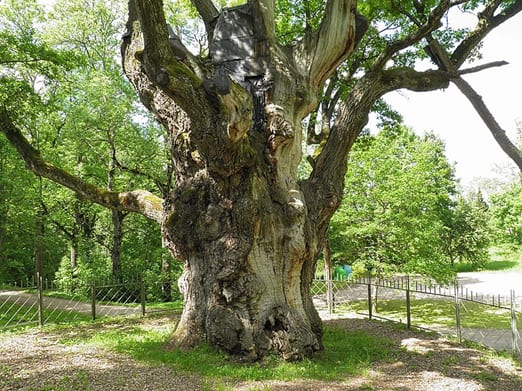
Lithuania is a rich and diverse nation and one of the main treasures is the conservation of natural resources. The Stelmuze Oak is one of the most revered tree species and it is located in Lithuania. This tree is over 1500 years old and it is 13 meters in diameter and 25 meters tall..
Trakai- castle on island (museum)
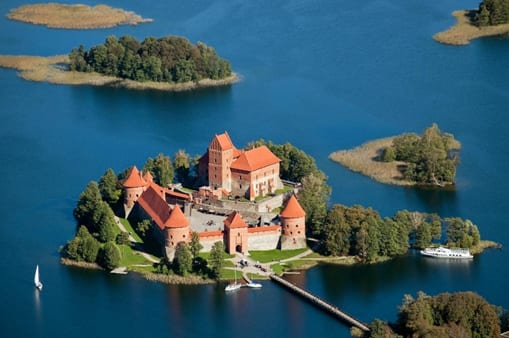
Trakai Island Castle was built in several phases.During the first phase, in the second half of the 14th century, the castle was constructed on the largest of three lake islands by the order of Grand Duke Kęstutis. The construction of Trakai Island Castle was related to the expansion and strengthening of the Trakai Peninsula Castle. Kęstutis moved his main residence and his treasury to the Island Castle.
Trakai Island Castle lost its military importance soon after the Battle of Grunwald, when the chief enemy of the Grand Duchy of Lithuania was defeated by the Polish-Lithuanian army. The castle was transformed into a residence and newly decorated from the inside. New frescos were painted on its walls, which have been partially preserved. Foreign emissaries were welcomed in the Ducal Palace. It is known that Jogaila visited the castle thirteen times between 1413 and 1430. In 1414, the Flemish traveler Guillebert de Lannoy described the castle in these words:
The old castle stands on one side of the lake, in open ground, the another one stands in the middle of a second lake and is within a cannon shot of the old one. It is completely new, built from bricks following French pattern.
The Hill of crosses
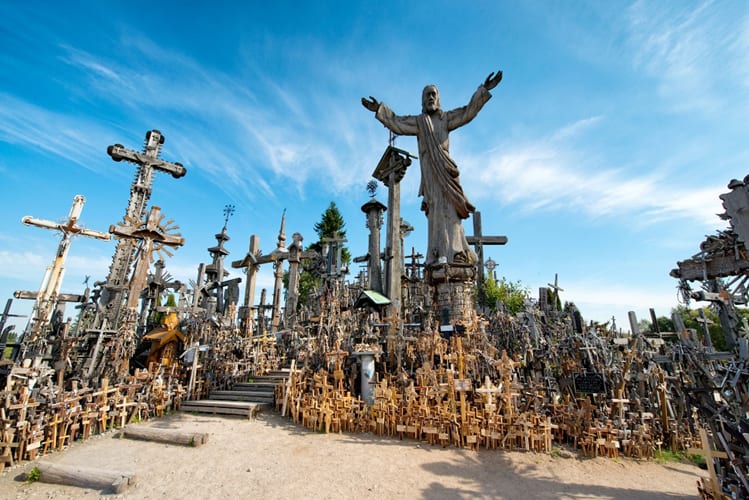
Hill of Crosses is also consider as one of the highlights of Lithuania. A powerful and mysterious place with thousands of crosses .Hill of Crosses represents the resistance of Lithuanians through the hardships of the last two centuries when Lithuania was under Soviet rule and a part of the Russian Empire. During those times bringing crosses to the hill that authorities tried to destroy helped Lithuanians to not to forget what they truly believed in.
Lithuanian seaside (Curonian split)
Lithuania has only around 90km of the seaside. That’s is not a lot compared to our neighbours, but those kilometers are very well used! You can find the small cute fishermen villages, the long white sand beaches, an ice-free port in Klaipeda (one of the few in northernmost Europe!), a party town Palanga and even a UNESCO World Heritage Site - Curonian Spit aka Neringa!
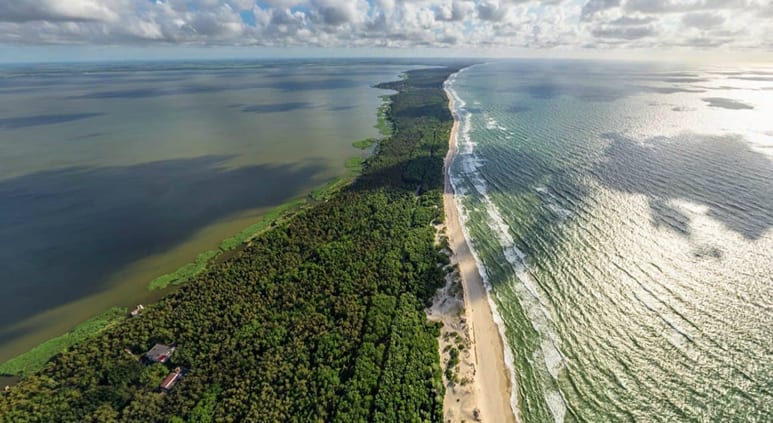
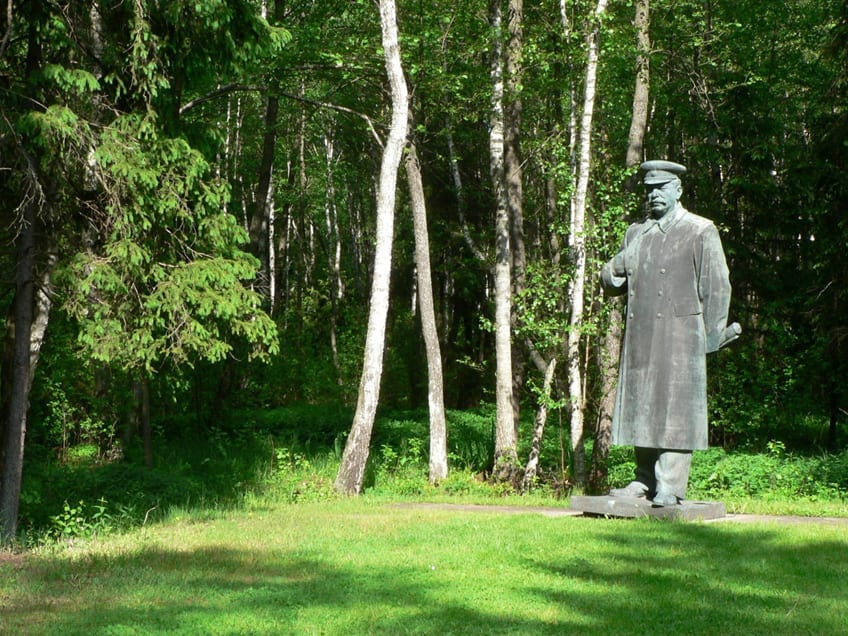
Grutas park
Grūtas Park (unofficially known as Stalin's World; Lithuanian: Grūto parkas) is a socialist realism museum with a sculpture garden of Soviet-era statues and other Soviet ideological relics from the times of the Lithuanian SSR. Founded in 2001 by a mushroom magnate Viliumas Malinauskas, the park is located near Druskininkai, about 130 kilometres (81 mi) southwest of Vilnius, Lithuania. The park requires an entrance fee.
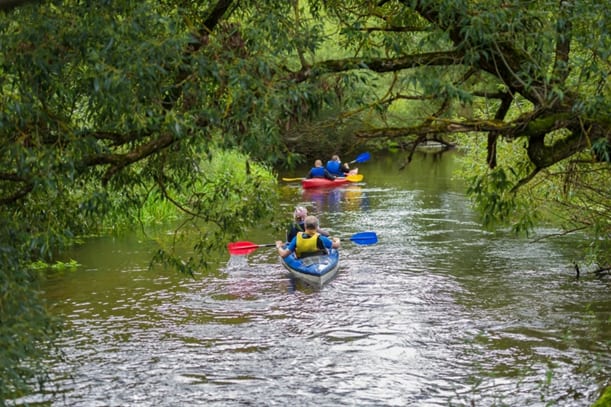
Kayaking and canoeing in rivers
At that moment when you are trying with all your strength not to capsize in a rapid river, the spirit of the conqueror and discoverer becomes especially strong. Just like when you cruise past the currant shrubs showing red on the banks, when you pick handfuls of blackberries, when you spot a rare bird in the woods of Dzūkija, or when you paddle from one lake to another in Aukštaitija. You feel like a discoverer when you set your eyes on the sand dunes of the Curonian Spit as you coast by in a hand-crafted canoe. And when you escape the urban jungle and paddle down the river right into the centre of Vilnius, you almost feel like you have conquered all of Lithuania’s waters. There are tours available from few hours to few days.
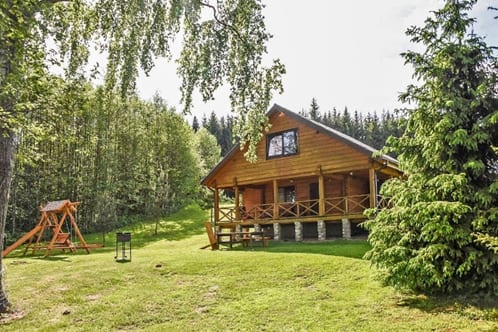
Countryside tourism
There are plenty of possibilities in Lithuania to rent the house with the land in quite place (might be in the forest, but easy reachable) few steps away from the lake and it might be equipped with sauna, grill and etc.- everything you need to enjoy some time on the nature. Some more details in the resources.
Indoor skying facility opened entire year
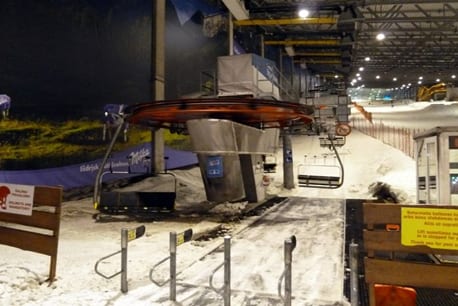
There are indoor skying facilities called “Snow arena” and located near Druskinijai it is winter inside even if outside there is summer and +20oC, there are two slopes- for beginners, 150m and main slope- 460m. There are possibility to rent the gear on site and take instructor for lessons. Find more information in the resources section.
Most popular dishes
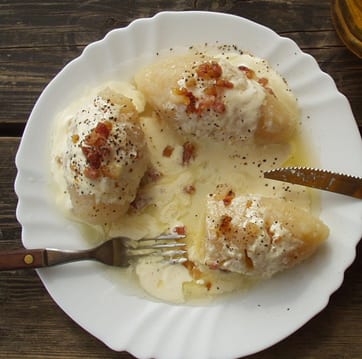
Cepelinai (Zeppelins)
Starting off with Lithuania’s national dish, cepelinai are large dumplings made of a mixture of raw and cooked potato dough that is filled with pork and doused in a ladle of a sour cream and bacon sauce. Though originally called didzkukuliai, the name was changed to cepelinai in the 20th century because of their resemblance to zeppelin airships.
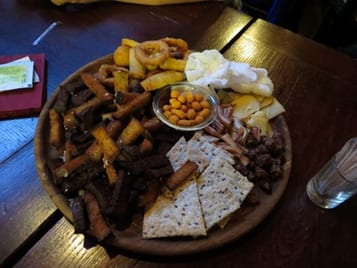
Fried bread
Fried bread, or kepta duona, is Lithuanian dark rye bread that been fried in oil, seasoned with garlic and salt and served with cheese sauce. Fried bread is frequently eaten as a snack to accompany beer and is a favorite comfort food that brings back warm memories for many Lithuanians.
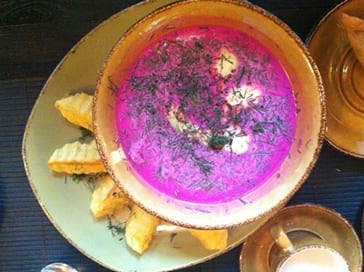
Chilled borsch- saltibarsciai
Served seasonally, this beetroot and kefir soup is accompanied by hardboiled eggs and boiled potatoes. Notably, chilled borscht is a shocking color of bright pink and is an indicator that warm weather has arrived in Lithuania.
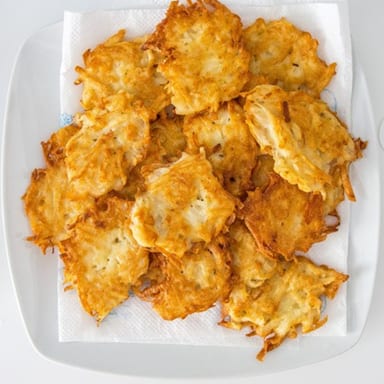
Potato pancakes
Potatoes are truly king when it comes to Lithuanian food and any number of potato dishes are eaten frequently throughout the week. Potato pancakes are a simple dish to make, comprising grated potatoes, onion and eggs mixed together and fried in oil. They are served with dill, scallions and sour cream.
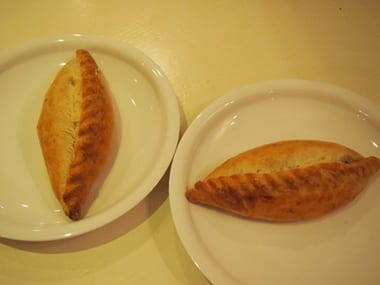
Kibinai
Kibinai are tasty hand pies that are the national dish of the Kariate people, an ethnically Turkic group that has lived in Lithuania for centuries. A flaky, soft crust surrounding meat, vegetables, cheese curd, or berry jams makes kibinai a favorite snack or side to accompany soup.
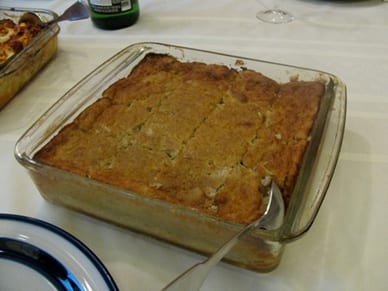
Kugelis
Kugelis is a hearty, baked potato pudding or lasagna that sometimes incorporates meat and is served with lingonberry jam, bacon, or sour cream. As with most Lithuanian dishes, recipes vary from person to person, so a slice of kugelis may differ at each different venue, making it an exciting dish to try.
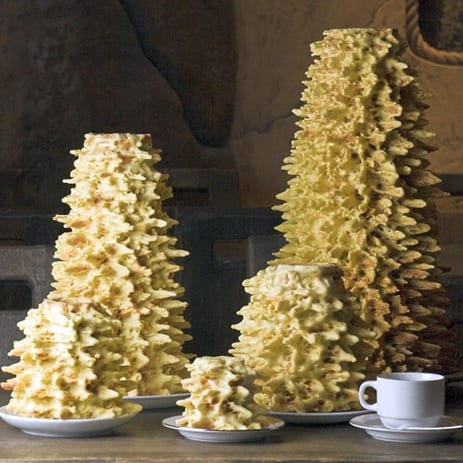
Sakotis
Raguolis, also called sakotis, is a traditional Lithuanian cake that is frequently served during special occasions such as weddings, Christmas Eve and Easter. This cake is a large, hollow ring with what looks like horns or spines around the edges that are created from dripping batter as the cake is turned around and around on a spit-like cooker.
References
[1]- Wikipedia https://en.wikipedia.org/wiki/Geographical_midpoint_of_Europe
[2]- Lonely planet https://www.lonelyplanet.com/lithuania/vilnius
[3]- Wikipedia https://en.wikipedia.org/wiki/Flag_of_Lithuania
[4]- Wikipedia https://en.wikipedia.org/wiki/Lithuania
[5]- Wikipedia https://en.wikipedia.org/wiki/Arvydas_Sabonis
[6]- Wikipedia https://en.wikipedia.org/wiki/Virgilijus_Alekna
[7]- Wikipedia https://en.wikipedia.org/wiki/%C5%BDydr%C5%ABnas_Savickas
[8]- Wikipedia https://en.wikipedia.org/wiki/Mikalojus_Konstantinas_%C4%8Ciurlionis
[9]- Lithuanian pages of London’s university https://www.ucl.ac.uk/atlas/lithuanian/language.html
[10]- Wikipedia https://en.wikipedia.org/wiki/List_of_Lithuanian_NBA_players
[11]- Big 7 travel https://bigseventravel.com/interesting-facts-lithuania/
Interesting resources to visit
- https://www.lithuania.travel/- Web-site of non profit organization, which was formed to increase visibility of Lithuania as good destination for tourist, available on many languages (including French).
- http://www.truelithuania.com/ resource for additional information about Lithuania as touristic destination, available in English.
- https://www.countryside.lt/ Book the houses in the countryside and enjoy the nature, as well as gives some ideas of places to visit in Lithuania
- https://snowarena.lt/en/home Web site of Snow Arena, which is indoor skying place, available entire year.